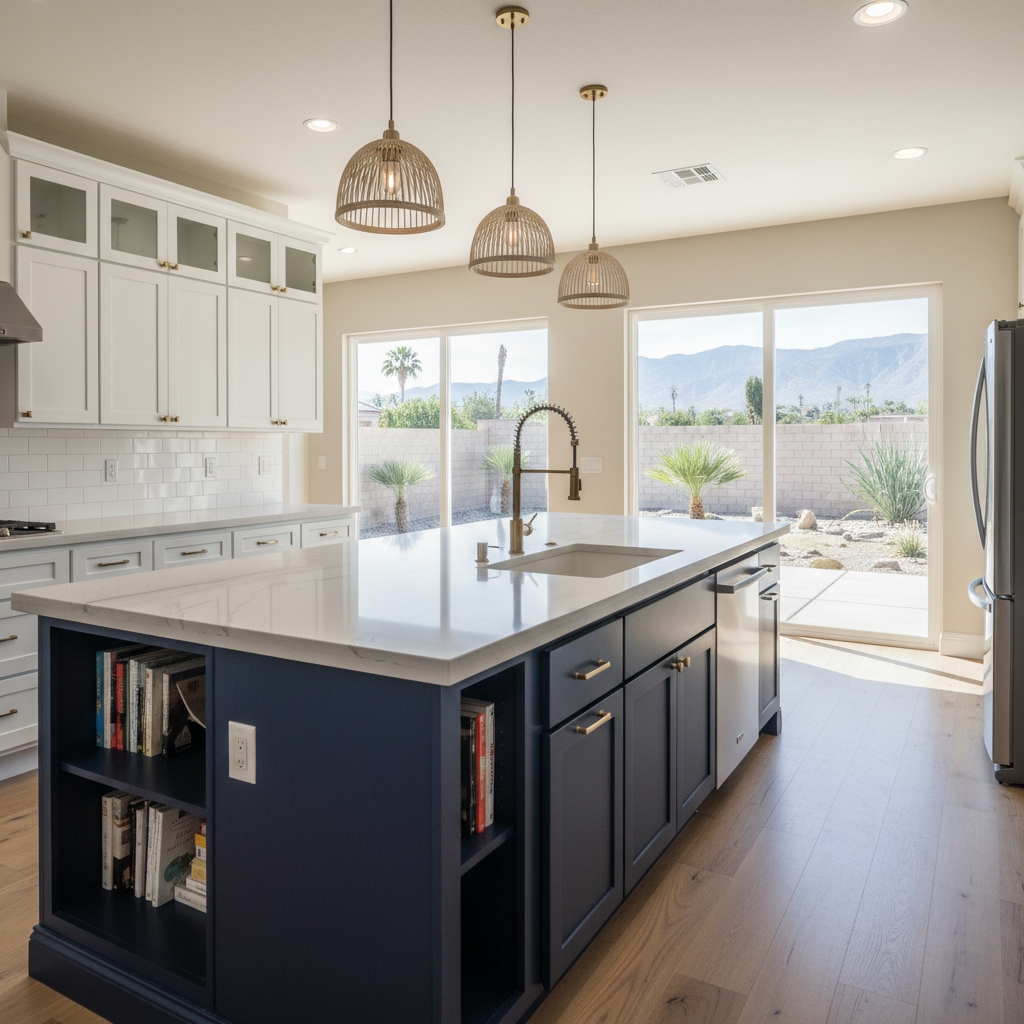
You want a kitchen island, right? It's a fantastic upgrade for almost any Corona home, adding counter space, storage, and a natural gathering spot. But I've seen enough projects over the years to know that homeowners often make some pretty big mistakes when they're planning or hiring for an island installation. Let's talk about how you can avoid them.
Mistake #1: Ignoring the Workflow Triangle
This is probably the most common one. People get excited about a big, beautiful island and forget about how they actually use their kitchen. You've got your fridge, your sink, and your stove – that's your primary workflow triangle. If your new island forces you to walk around it like you're navigating a maze just to get from the fridge to the sink, you've got a problem. It's going to be annoying, inefficient, and you'll regret it every single day.
Before you even think about dimensions, think about movement. Grab some painter's tape and mark out where you think the island will go. Then, pretend to cook. Walk from your fridge to the sink, then to the stove. Can you open the dishwasher without bumping into the island? Can two people comfortably pass each other? You need at least 36 inches of clear walkway around all sides of the island, and ideally 42 inches in high-traffic areas. More is always better if you have the space.
Mistake #2: Underestimating Electrical and Plumbing Needs
A lot of folks just think of an island as a big piece of furniture. But if you want outlets for appliances, task lighting, or even a prep sink, you're talking about running new electrical lines and possibly plumbing. This isn't just a matter of plugging things in. You'll need dedicated circuits for high-wattage appliances, and plumbing lines need to be properly vented and drained. This means cutting into your slab foundation, which is common in many Corona Ranch homes, or running lines through a crawl space if you have one. It's a significant part of the project cost and complexity.
Don't let a contractor tell you they can just