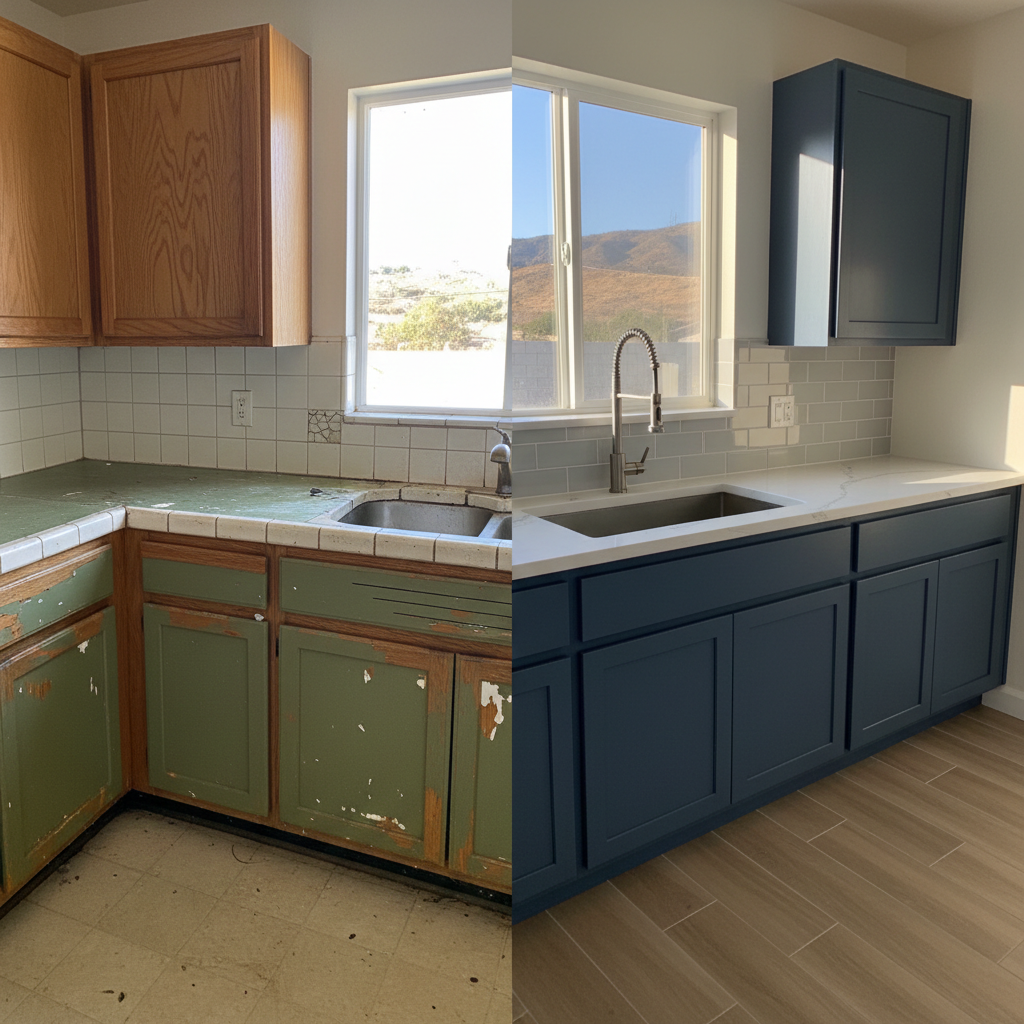
Alright, let's talk countertops. When you're planning a kitchen remodel, especially here in Corona where everyone wants their home to look its best, one of the biggest decisions is what kind of surface to put in. And then, how are you actually going to get it installed? Most folks think about the material – granite, quartz, marble – but there's another big choice that impacts cost, timeline, and even the final look: going with full slabs or prefabricated (prefab) sections.
Understanding the Basics: Slab vs. Prefab
So, what's the deal with these two? When I say 'slab,' I'm talking about a big, uncut piece of stone or engineered quartz, usually around 10-12 feet long and 5-7 feet wide. It's a raw canvas, really. Your fabricator then cuts, polishes, and finishes this slab to perfectly fit your kitchen's dimensions, including all the sink cutouts, cooktop openings, and edge profiles.
'Prefab' is a bit different. These are pieces of stone or quartz that have already been cut to standard countertop depths (usually 26 inches for base cabinets, 36 inches for islands) and often have one long edge already polished. They come in common lengths, like 8 or 9 feet. Think of them as 'off-the-shelf' sections, ready for a little customization.
Cost: Where Your Money Goes
This is usually the first question on everyone's mind, and for good reason. Generally speaking, prefab countertops are going to be significantly less expensive than full slabs. Why? Because you're paying for less material waste and less custom labor. The manufacturer cuts these in bulk, so they pass those savings on. For a typical Corona kitchen, you could be looking at a 30-50% savings on material costs alone with prefab, sometimes even more.
With slabs, you're paying for the whole piece, even the parts that get cut out for your sink or become scraps. Plus, the fabrication process is much more labor-intensive. Each cut, each polish, each edge detail is custom-made for your specific layout. If you've got a huge island or a really intricate kitchen design with lots of angles, a slab might be the only way to go, but you'll feel it in your wallet.
Appearance & Seams: The Visual Impact
This is where slabs really shine. Because you're working with a single, large piece of material, you get incredible consistency in the pattern and color. If you've got a granite with a lot of movement or a quartz with a unique veining, using a slab means those patterns can flow seamlessly across your counters, often with fewer or less noticeable seams. On a large island, you might even get one continuous piece, which looks fantastic.
With prefab, you're limited by those standard lengths. This means you're almost guaranteed to have more seams, especially in a larger kitchen. A good installer, like us at Aim High Kitchen Remodeling, can make those seams as inconspicuous as possible, but they'll still be there. Also, because they're pre-cut, you might not get as much control over how the pattern aligns at the seams. If you're particular about a continuous flow in your stone's pattern, prefab might not make you happy.
Durability & Maintenance: No Real Difference Here
When it comes to how tough your countertops are or how you need to care for them, there's no difference between a slab and a prefab piece of the same material. Granite is granite, quartz is quartz, regardless of how it was cut and sized before installation. Both will hold up great to the demands of a busy kitchen. You'll still need to seal natural stone, and both will resist scratches and heat pretty well, assuming you're not putting a red-hot pan directly on them.
Installation Time & Complexity
Prefab can sometimes speed up the installation process because a lot of the initial cutting and polishing is already done. However, don't mistake 'prefab' for 'DIY easy.' You still need precise measurements, careful cutting for sink and cooktop openings, and expert handling to get those pieces installed correctly and seams tight. It's not a weekend project for most homeowners.
Slab installation is a longer process from start to to finish. First, you pick your specific slab(s) from a stone yard. Then, we take detailed measurements and create templates. The fabricator then takes those templates, cuts your slab, polishes the edges, and makes all the cutouts. This can take a couple of weeks, sometimes more, before the actual installation day. It's a more involved process because everything is custom-made for your space.
My Recommendation for Corona Homeowners
Look, here in Corona, we've got a lot of homes that were built with fairly standard kitchen layouts. Many of them are getting a bit dated, and homeowners are looking for a fresh, modern look without completely gutting the place or breaking the bank. For most of these situations, especially if you're not dealing with an exceptionally large or unusually shaped kitchen, prefab countertops are an excellent choice.
You get the beauty and durability of natural stone or quartz at a much more accessible price point. The savings can then be put towards other upgrades, like a new backsplash, better appliances, or even some custom cabinetry. I've installed countless prefab countertops in homes all over Corona, from the older neighborhoods near Main Street to the newer developments out by Dos Lagos, and they look fantastic when done right. We're talking about homes that see a lot of use, maybe a little more sun exposure than some other areas, and these countertops hold up beautifully.
Now, if you've got a truly custom kitchen design, a massive island that needs to be one piece, or you're dead set on a very specific, highly veined granite that needs perfect pattern matching, then a full slab is probably the way to go. You'll pay more, but you'll get that truly bespoke look.
Ultimately, it comes down to your budget and your aesthetic priorities. Don't let anyone tell you that prefab is 'cheap' or 'inferior.' It's a smart, cost-effective solution that delivers great results for the vast majority of kitchen remodels. Give us a call at Aim High Kitchen Remodeling, and we can walk you through the options for your specific kitchen, show you some samples, and help you decide what makes the most sense for your home and your wallet.